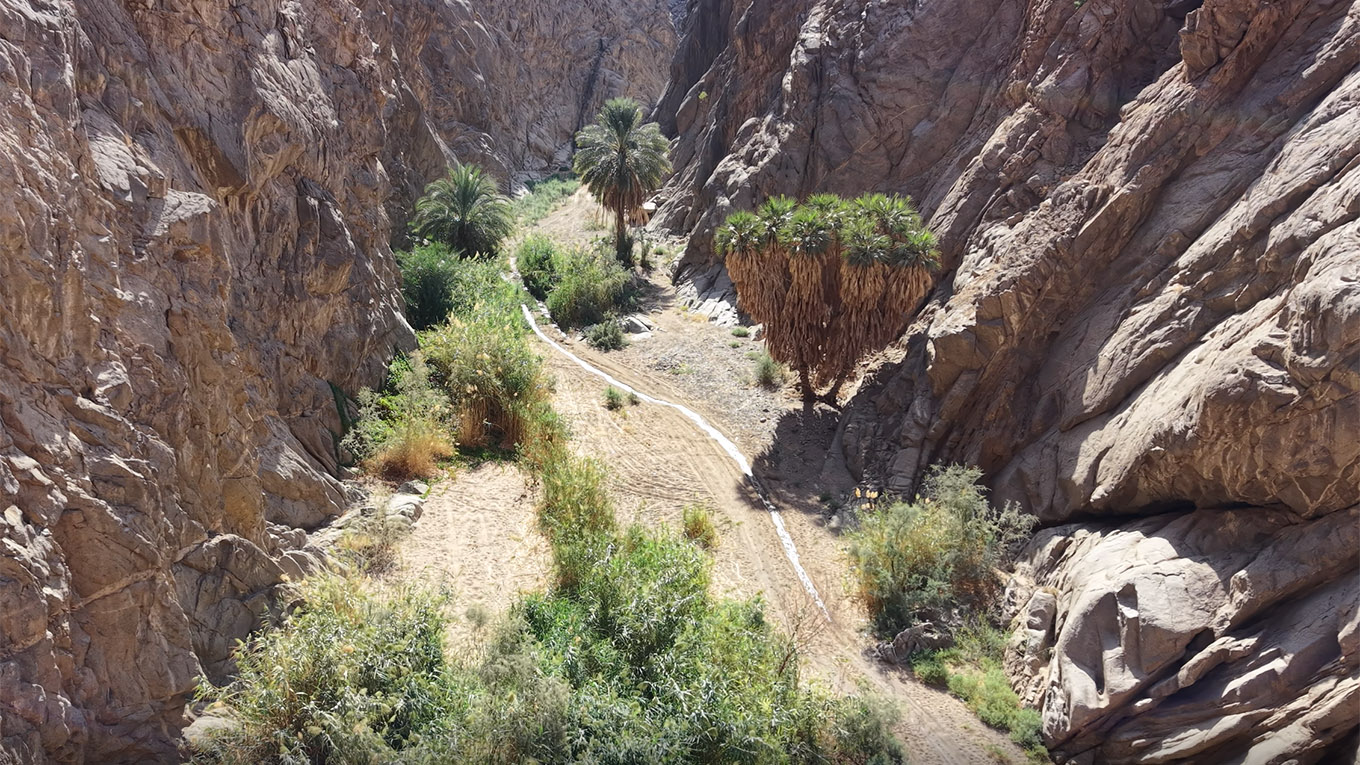
Desert-to-sea canyon — granite walls, living springs, Gulf of Aqaba in one walk
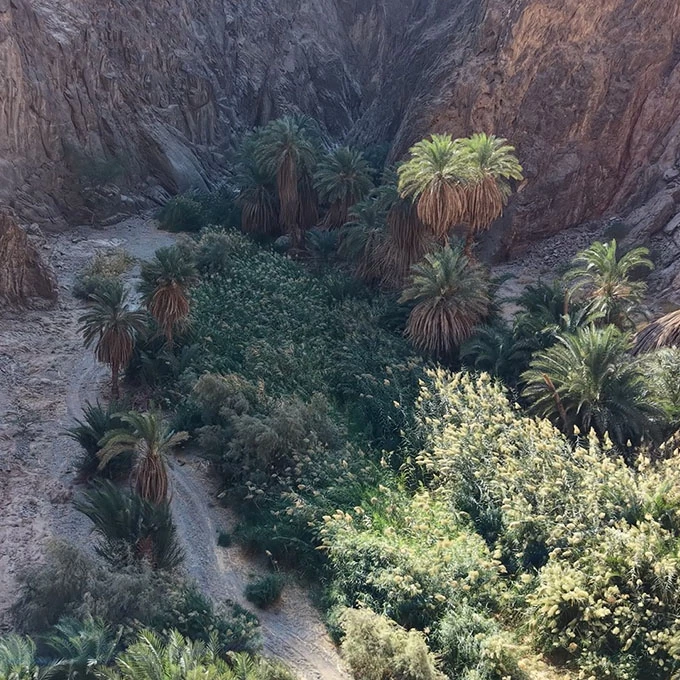
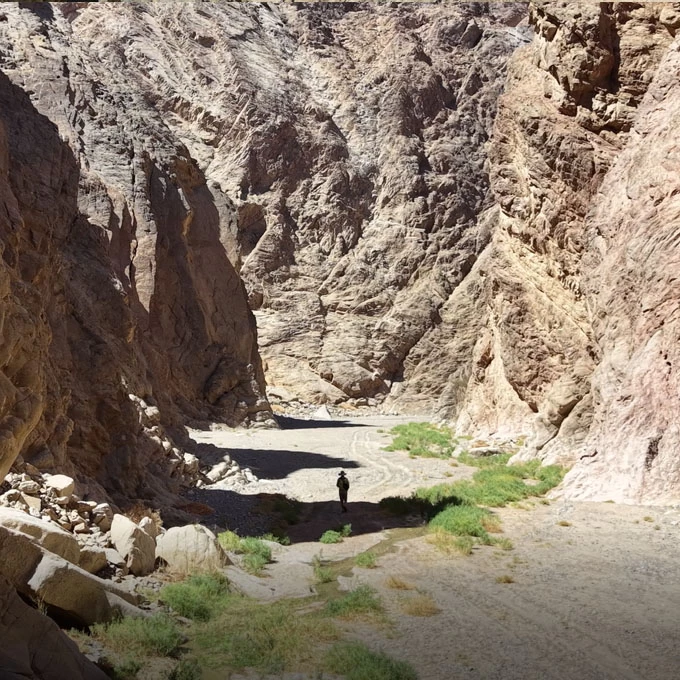
Wadi Tayyib al Ism is one of the few places in northwestern Saudi Arabia where a single walk takes you from the deep desert interior to the edge of the sea. The wadi cuts through some of the region's oldest exposed geology — Precambrian granite that has been cracking, shifting, and polishing itself for hundreds of millions of years — and along this five-kilometre route, freshwater springs rise through fault lines in the rock and sustain a continuous ribbon of plant and animal life from the canyon mouth to the coastal threshold.
The route passes through ten distinct environments in sequence: palm oases, silver-walled granite corridors, reed-edged spring channels, open gravel plateaus, boulder fields, and finally the wide panorama of the Gulf of Aqaba with the Sinai mountains visible on the far horizon. No single section resembles the last. This environmental diversity — packed into a walk that most adults complete in under three hours — is what makes the wadi exceptional, both as a natural landscape and as a destination for families, naturalists, and photographers.
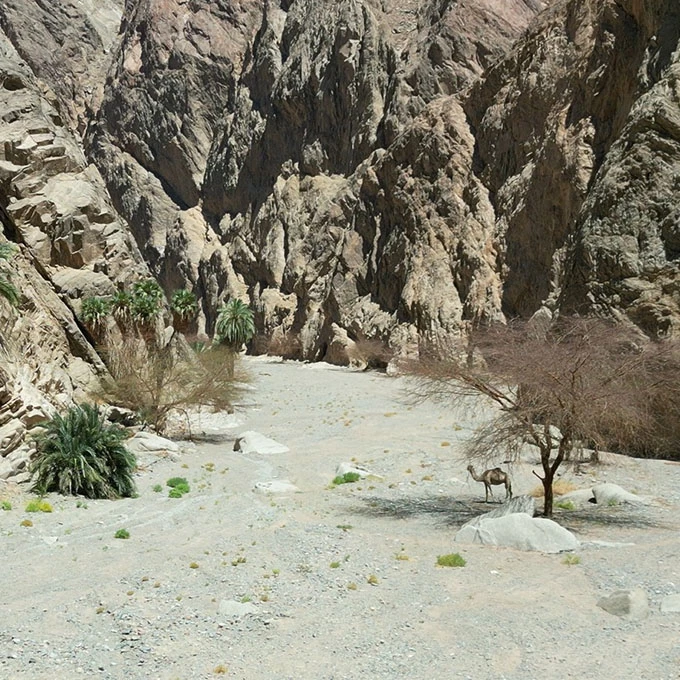
The nearest town, Al Bada, lies 27.5 kilometres away via unpaved desert tracks, which has historically limited casual visitation and preserved the valley's character. The wadi has long served as a seasonal refuge for herders and their animals, and evidence of this use — camel paths, shade-resting spots near springs — is woven into the landscape. This map is designed to support respectful, informed exploration and to deepen understanding of the wadi's natural systems, cultural significance, and environmental fragility.
Panel 2
A Place Before Map
Exile, sacred tradition, and four thousand years of continuous habitation
The name itself is the first layer. Wadi Tayyib al Ism translates as "The Valley of the Good Name" — not a geographical description but a designation rooted in sacred tradition. Local belief, persistent across generations and consistent across the communities of northwestern Arabia, holds this canyon to be the valley where Moses lived during his years of exile from Egypt, finding refuge among the Midianite people of the region. The "good name" is understood as a reference to that association: a place marked by sacred history rather than topography alone. The tradition is not marginal. It is the primary way this valley has been understood by the people who know it best, for longer than any map has existed.
The town of Al Bada, 27.5 kilometres east along the approach track, was the ancient capital of Madyan — Midian in biblical tradition — one of the oldest continuously inhabited settlements in northwestern Arabia. On the sandstone cliffs surrounding the town, Nabataean-style tombs are carved directly into the rock face, visible from the road and easy to pass without registering what they are. They mark a civilisation that recognised these desert springs as a resource worth building a culture around — the same springs that feed the wadi you are about to walk through. The water that surprises visitors today was already ancient when those tombs were cut.
What the Nabataean presence makes visible is a pattern of habitation that has never broken. The springs that rise through the bedrock fault at the canyon floor are structural, not seasonal — they flow in dry years and wet ones, they flow regardless of what happens above ground, and they have done so for long enough that successive peoples have organised their lives around them. Midianite herders, Nabataean traders, and the beduin families who use this valley today are part of the same continuum, separated by millennia but sustained by the same water.
The herders you will encounter on the route — checking on camels in the lower valley, resting in the shade of the palm groves, occasionally sharing tea with walkers — are not a remnant of something disappearing. They are the current expression of a relationship with this landscape that has been continuous since before the tombs were carved. Understanding this changes how the wadi reads. The camel paths, the shade-worn ground near the springs, the informal resting spots beside the water — these are not incidental. They are the most recent marks left by the longest human story in northwestern Arabia.
Panel 3
Shared Landscape: Who Else Is Here
Herders, families, traditional practices, and the checkpoint at the Gulf
Wadi Tayyib al Ism is a working landscape as well as a hiking destination. Camel herders pass through regularly to check on animals grazing in the lower valley, rest in the shade of the palm groves, and occasionally share tea with walkers they encounter. These interactions tend to be calm and genuinely hospitable — the wadi's long history as a shared resource is reflected in the easy manner of its regular users.
Families visit the springs and oasis sections to rest, pray together, and spend time in the valley's natural quiet — a tradition that gives the wadi its sense of communal rhythm rather than recreational solitude. Hikers arriving with this awareness tend to have a richer experience and cause fewer unintended disruptions than those who treat the wadi as an empty wilderness.
Bird hunting is occasionally practised in the area, reflecting a longstanding local tradition. If you hear gunshots, stay calm, identify the direction, and give hunters a wide berth. There is no cause for alarm, but situational awareness is sensible.
At the western end of the wadi, where the valley opens toward the Gulf of Aqaba, a coast guard checkpoint controls access to a coastal road associated with the Magna development project. Hikers arriving from within the valley are required to turn back at this point. The checkpoint is clearly visible as you approach the shoreline. Access conditions may change over time; comply with any instructions from officers and treat the restriction as protecting continued access to the valley as a whole.
Panel 4
Rock, Water & Time
How fractured granite keeps water flowing in one of Arabia's driest places
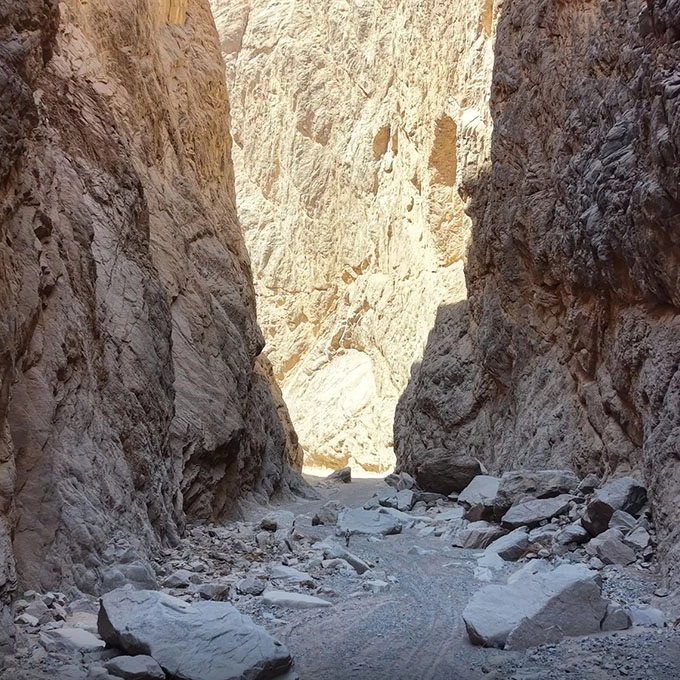
The walls of Wadi Tayyib al Ism are among the oldest exposed rocks in Saudi Arabia — Precambrian granite formed deep in the earth's crust over 600 million years ago, then uplifted by tectonic movement and steadily carved by erosion, episodic floods, and the slow work of wind and temperature change. The smooth, undulating faces you walk alongside in the Silver Walls and Granite Passage sections are the result of this sustained polishing, a process still actively underway.
Water persists in this valley despite the surrounding aridity because of a structural quirk in the bedrock. Rainfall and upslope runoff percolate into the fractured rock above, then travel slowly along fault planes and zones of weakness until they resurface as springs at low points in the valley floor. These are not seasonal or rain-dependent flows in the usual sense — they are fed by a reservoir that recharges slowly and releases steadily, which is why you will find running water here even during prolonged dry periods.
The large boulders scattered across the valley floor — some six metres across, some smooth and rounded, some freshly cracked — are not permanent fixtures. They have fallen from the canyon walls, been moved by flood events, and will eventually be carried further toward the sea. The hollowed niches, half-sphere cavities, and undercut faces you notice in the walls are the early stages of boulders yet to fall. Understanding the landscape as an active, ongoing process — rather than a fixed scenic backdrop — changes how you read it as you walk.
Panel 5
Life in the Wadi
Where to find wildlife, what to look for, and how seasons change the wadi
Life in Wadi Tayyib al Ism is not evenly distributed. It clusters tightly around water and shade, then thins out across the dry, exposed sections in between. Understanding this pattern helps you know where to look and when to slow down.
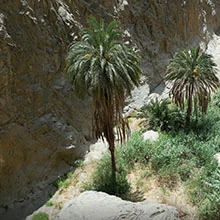
Date palms and doum palms provide the structural framework — tall, long-lived trees that create canopy, attract frugivorous birds, and stabilise the sandy wadi floor against flash-flood erosion. Acacias occupy drier positions between springs, fixing nitrogen in the soil and casting enough shade to shelter lizards and insects through the heat of the day. Reeds trace the active spring lines with precision: where you see dense reed growth, water is at or near the surface.
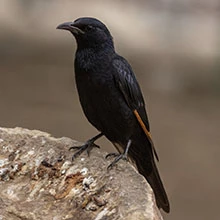
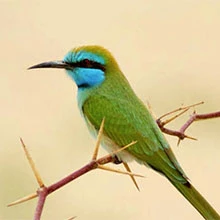
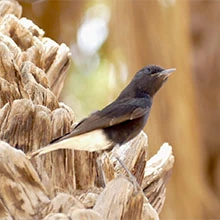
Bird activity is most concentrated in the early morning — Tristram's Starlings along the cliff faces, White-crowned Wheatears on rocky surfaces, Arabian Green Bee-eaters above the palms. Toward dusk, Desert Geckos emerge and Arabian Toads call near the springs.
The wadi's mammal community is more substantial than its desert setting suggests: Arabian Red Fox, Arabian Wildcat, Nubian Ibex, Arabian Wolf, and likely Blanford's Fox, Rock Hyrax, and Desert Hedgehog have all been recorded or are considered present. Bats and small rodents are documented throughout.
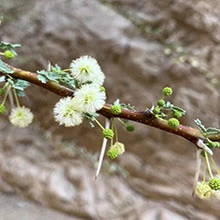
After rare rainfall events, the wadi briefly transforms: butterflies emerge, acacia flowers open and fill the corridor with scent, and frogs reach peak vocal activity. Move slowly and quietly through the spring sections — the activity window is short and easily disturbed.
Panel 6
Heat, Water & Your Safety Margin
How much water to carry, when not to walk, and why previous incidents happened
Heat is the primary safety variable in Wadi Tayyib al Ism, and it is consistently underestimated by first-time visitors. Even in cooler months, the reflective granite walls amplify solar radiation in exposed sections, and the temperature difference between a shaded corridor and an open plateau can exceed ten degrees. In summer, plateau temperatures reach 43°C / 109°F and shade provides only partial relief.
For a direct out-and-back walk to the coast and back, carry a minimum of 1.5 to 2 litres of water per adult. If you plan extended rest stops, have children with you, or move slowly, increase this to 3 litres. Do not drink from the freshwater springs — they are shared by birds, camels, and other animals along the entire length of the wadi and are not safe for human consumption. Stock all water in Al Bada before entering the valley and distribute loads across your group. There are no resupply points anywhere along the route.
Dehydration incidents have occurred here, all involving visitors who carried less water than the distance required. Early warning signs are easy to dismiss: dry mouth, eyes that feel gritty, reduced urge to drink despite the heat. By the time thirst becomes urgent, dehydration is already advanced. Treat the first sign of discomfort as a signal to stop and drink — not to push on.
Wear a hat and light long-sleeved clothing regardless of cloud cover and prioritise the shaded canyon sections during the middle of the day. Avoid walking during peak heat hours — the Gravel Plateau and the final approach to the coast are the most exposed sections and are best timed for early morning. Start early.
Panel 7
Reading This Map
Visual hierarchy, symbols, GPS anchors, and how the distance ladder works
The map is organised around a single continuous route shown as a red line tracing the path through the wadi. Realm boundaries are marked where the landscape character changes meaningfully, not at arbitrary distance intervals. The outward and return journeys follow the same path in opposite directions.
The distance ladder running along both sides of the route shows your remaining distance and walking time to the coast (left side) and to the trailhead (right side) at each milestone marker. Times are based on a moderate adult walking pace on flat terrain; adjust upward by 20–30% for families with young children, hot conditions, or if you plan extended stops.
GPS anchor points are printed at the trailhead and at key decision points along the route. Species and flora callouts are placed where each is most likely to be encountered — each links to an external source for further information about that species.
Scan the QR codes beside audio callouts to access genuine recordings made on site — birdsong, spring water, and the ambient sound of each realm as it actually sounds. Check for the latest version before your trip — the QR code on the cover always points to the most current edition.
The legend in the top right corner identifies all symbols used. The realm strip along the bottom provides a quick sequential reference showing each realm's character, distance, and walking time. All GPS coordinates are given in decimal degrees and are compatible with standard navigation apps on your phone.
Panel 8
How to Read the Realms
Ten named environments, each with its own character — using them to pace your walk
The ten realms are not arbitrary divisions. Each marks a genuine shift in the landscape's character — its light quality, sound, temperature, width, and the plant and animal life it supports. Naming these transitions makes the wadi's environmental variety legible while you're moving through it, giving families and first-time visitors clear reference points without requiring constant map consultation.
Narrow granite corridors lower the temperature and magnify sounds — water, birds, your own footsteps — creating an intimate, enclosed atmosphere. Oasis pockets concentrate shade, water, and wildlife into compact areas ideal for rest and observation. The open gravel plateau reverses all of this: glare increases, shade disappears, and the scale of the valley becomes suddenly apparent. The coastal threshold opens the horizon entirely. Each transition repeats in reverse on the return leg, often with different emphasis as the sun has moved.
Use the realms to structure your rhythm: move steadily through exposed or featureless sections, slow down where shade and water converge; the Twin Pools and Oasis are natural rest anchors. The distance ladder on the map shows your remaining distance and time to both the coast and the trailhead from each milestone, allowing you to make informed turnaround decisions if conditions change.
Panel 9
Leave It as You Found It
Why waste concentrates here, and how one extra bag makes a real difference
Desert environments do not process waste the way wetter landscapes do. Without regular rainfall to disperse litter and biological processes to break down organics, waste accumulates and concentrates near springs, shade spots, and informal picnic areas — precisely the places visitors return to repeatedly. A single cleanup of one spring location filled four large bags of plastic. That waste had arrived one piece at a time, left by people who each individually thought their contribution was minor.
Please carry out everything you bring in, including food scraps and fruit peel. Organic waste may seem harmless but it alters animal behaviour by habituating wildlife to human food sources — a change that once established is very difficult to reverse. You may also notice small tags on some trees — these support ongoing ecological survey work — please don't remove or disturb them.
Consider bringing a spare bag and removing any litter you encounter along the route. This is not an obligation but a simple act that measurably improves habitat quality and preserves the wadi's character for everyone who follows. The slower the visitation growth, the longer it remains a place worth visiting — responsible use is what makes continued access possible.
Panel 10
Getting to the Trailhead
27.5 km of unpaved wadi track from Al Bada — scenic, navigable, offline map
Wadi Tayyib al Ism is accessible from both ends. The western end, where the wadi meets the Gulf of Aqaba shoreline, is currently closed to the general public — the coastal road requires a special permit due to ongoing construction in adjacent areas. This map is written for visitors approaching from the east, via Al Bada, for which no access restrictions are currently in effect.
From Al Bada town, leave from the northern exit at coordinates 28.512809, 35.001495 and head north along an unpaved but compacted gravel track. This road is regularly used by beduin herders accessing the surrounding wadis and is generally well-maintained. After 8.5 km you will reach the mouth of the wider wadi at 28.580914, 34.975959. From here, continue west into the valley for a further 19 km to reach the trail start — 27.5 km in total from Al Bada, approximately 40 minutes of driving.
The drive through the wadi is itself worth paying attention to. The canyon walls change colour as you travel deeper — pale granite giving way to warmer, reddish tones — and palm trees begin appearing along the valley floor with increasing frequency. Both are signals: the colour shift marks a change in the rock composition, and the palms mark rising groundwater. By the time the palms are dense on either side, you are close to the trail start.
Follow the GPS waypoints below in sequence. Several branch exits leave the main track — taking a wrong turn is easy, particularly in low light. Ensure devices are fully charged before departure. Leave your vehicle at the trail start, coordinates 28.571437, 34.825989.
GPS Waypoints: (1) 28.512809, 35.001495 — Al Bada town exit, head north. (2) 28.580914, 34.975959 — Mouth of wider wadi, continue west. (3) 28.597867, 34.930446 — Exit left toward main canyon. (4) 28.575032, 34.875977 — Continue straight. (5) 28.572722, 34.851851 — Continue straight. (6) 28.571437, 34.825989 — Trail start, park here.
Panel 11
The Doum Palm
The wadi's most distinctive tree, and a tradition worth trying
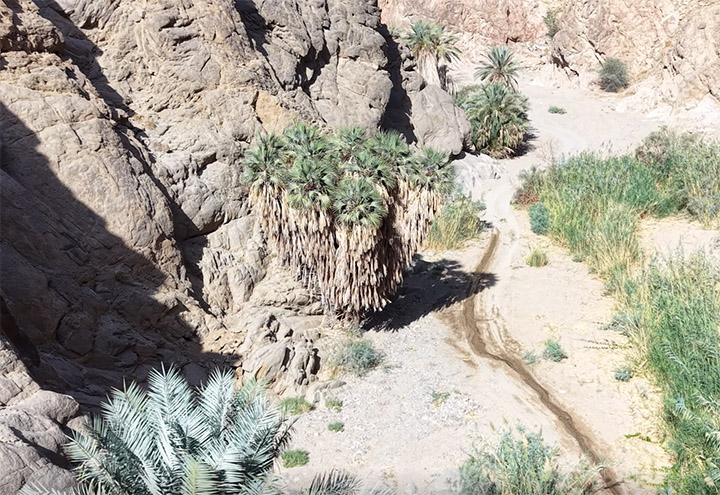
The Doum Palm is the only palm species that forks — a single root system producing multiple trunks that divide repeatedly into a dense, branching mass, each arm crowned with a fan of stiff fronds. Most palms are defined by their singular vertical line; the Doum contradicts this entirely. There are two along this route. They are easy to overlook if you're moving quickly — worth stopping for.
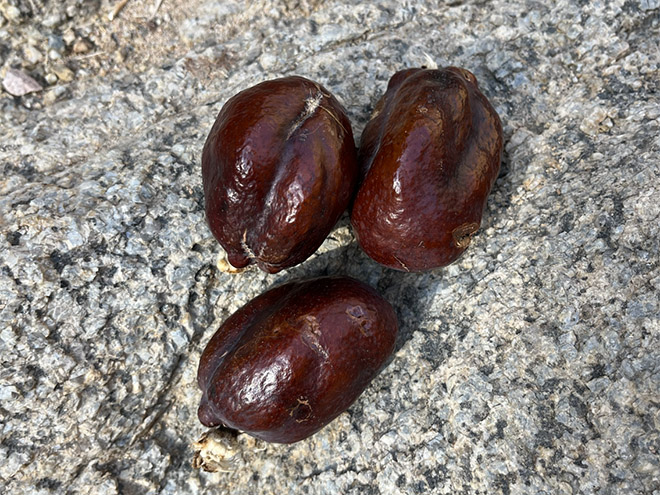
The fruits are hard, small, and brownish-purple — found on the ground beneath the canopy. Scrape one against granite and the exposed inner tissue releases an immediate, unmistakable scent: warm, sweet, and distinctly gingerbread-like. Wet the scraped surface with water, draw it back, and you have the taste the beduin herders of this valley have known for generations. The fruit has been traded and consumed across northeastern Africa and the Arabian Peninsula for millennia — its flavour is one of the few things in this landscape that connects you directly to that history.
Collect only from the ground, never from the tree. The fruits are a food source for birds and small mammals through the dry season — removing them from the tree disrupts that supply. Taking a fallen fruit is part of the tradition. Taking more than you need is not.
Panel 12
Bringing Children
Best sections for families, how to pace the walk, what to watch for
Wadi Tayyib al Ism is well-suited to families who approach it with realistic expectations about distance and heat. The full five-kilometre route to the coast is achievable for fit older children but is genuinely long for younger ones — particularly on the return leg, which is uphill and typically warmer. Consider targeting the first two or three realms for a first visit, treating the Silver Walls or Oasis as a natural turnaround point.
The Twin Pools are the single most rewarding destination for children: shallow rock pools with tadpoles, a small waterfall, dragonflies, and a shaded overhang where everyone can rest. If you can reach only one landmark, make it this one. The Oasis, with its flowing water, fallen tree trunks as natural seating, and wildlife activity, is a close second.
Carry more water than you think you'll need and bring snacks — children lose interest in walking significantly faster when hungry or thirsty. Allow unhurried time at water features; rushing children through the engaging sections makes the dry, open sections harder. Establish a simple group rule before entering: stay together, do not touch wildlife, and do not enter the water without an adult present.
For footwear, enclosed shoes with ankle support are preferred. Fine gravel accumulates quickly in open sandals and becomes painful on small feet. The spring crossings are shallow but slippery — lift children across rather than letting them step on the wet granite independently. Closed shoes also provide better protection against sharp rock edges through the boulder sections.
Panel 13
On-Trail Safety
Sun, footing, heat, and situational awareness — the practical essentials
The wadi is technically straightforward — no scrambling, no route-finding difficulty, no exposed ridges — but several serious safety incidents have occurred here, and all involved combinations of heat, distance, and communication failure rather than technical hazard. The risks are manageable with preparation.
Avoid walking during the middle of the day, particularly in summer months. The Gravel Plateau and the final approach to the coast are the most exposed sections and should be timed for early morning or late afternoon. Wear a hat, light long-sleeved clothing, and sunscreen regardless of cloud cover. Carry more water than you expect to need.
On wet rock surfaces and boulder fields, move deliberately and test footing before committing weight. Granite becomes extremely slippery when damp, particularly on the angled faces near the spring crossings. Children should be closely supervised around the Twin Pools, where surfaces adjacent to the water are smooth, wet, and deceptively angled.
Expect no mobile signal for most or all of the route. Download offline maps before departure and tell someone outside the valley your planned return time. In an emergency, the most reliable option is to return to the trailhead parking area and drive toward Al Bada where signal returns. If rain is falling anywhere in the catchment above — even if the sky above you is clear — leave the wadi immediately and move to high ground. Flash floods arrive faster than they sound.
The Ten Realmsswipe →
Realm 1
The Spring
First water, first shade, first birdsong — the wadi announces itself
The trail enters the wadi along a gradual descent of sand and compacted gravel, the granite walls rising on either side and narrowing the sky to a corridor. The rock here is already old and worn — undulating faces polished by millennia of episodic flood — but the valley floor at this stage is dry, open, and gives little away.
The first sign of change is the palms. Scattered at first, then gathered into a loose canopy, they mark the approach to the wadi's first freshwater spring — a reliable source that rises through the bedrock fault regardless of season and feeds the life that clusters around it. The air cools noticeably before you reach the water.
In the early morning this section carries birdsong at a volume that seems disproportionate to the desert entry you made minutes earlier. Rock doves move between the cliff faces and palm crowns; smaller passerines work the low shrubs near the spring edge. The sound alone signals that the wadi is a different environment from what surrounds it.
The oasis provides natural shade and smooth boulders for resting — a useful stop before the route deepens into the canyon. The spring is the first of several along the route; understanding that the water here is structural rather than seasonal changes how you read everything that follows.
DIST640 m10 minElev. 160 m
Realm 2
Silver Walls
Smooth granite corridor, moving water, and a flowering vine found nowhere else
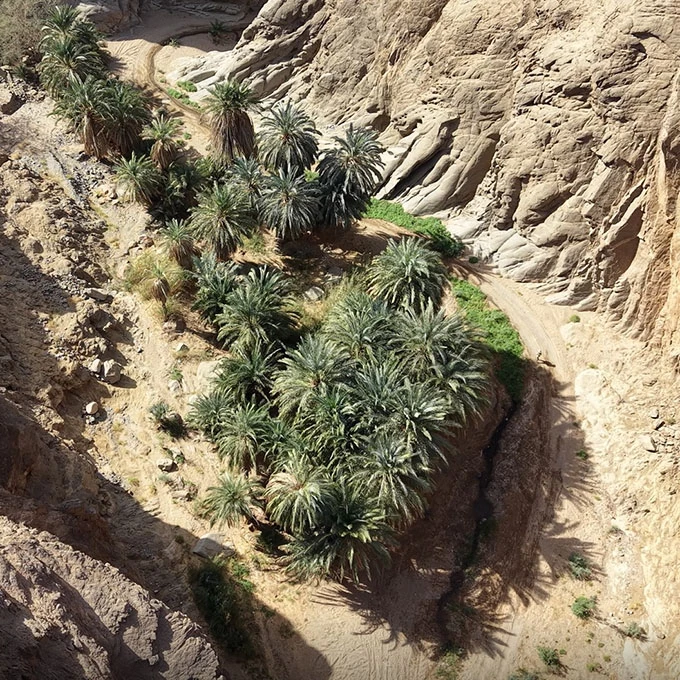
Where the spring makes its first sharp turn, the valley is suddenly defined by two granite faces that rise close on either side — light grey, smooth, and undulating, catching the angle of morning light and throwing it in slow bands across the corridor floor. These walls give the realm its name and its atmosphere. Move through here early.
The water follows a straight line along the valley floor before opening into a small clearing. Here a mature date palm and a rare doum palm stand together, forming a natural canopy over one of the route's best resting spots — the ground beneath them smooth, the shade reliable, the spring audible nearby.
On the right-hand wall, a single flowering vine carries delicate purple blooms — found nowhere else along the five-kilometre route. It is easy to walk past without noticing. Worth stopping for. In the right season the flowers attract small insects and the occasional sunbird.
The Silver Walls section sets the wadi's character early: intimate scale, moving water, the contrast between enclosing rock and open clearing. What follows will be larger and louder in places, but this realm establishes the quality of attention the wadi rewards. The walls themselves repay a closer look — polished by millennia of floodwater rather than wind.
DIST300 m5 minElev. 140 m
Realm 3
Palm Grove
A broad palm forest, open sky, and the dry rustle of fronds carrying across the valley
Beyond the Silver Walls, the valley opens abruptly — from a narrow corridor to a broad floor nearly a hundred metres wide — and the dominant feature is not rock but trees. Mature date palms rise across the full width of the wadi, some decades old, some fallen and weathered on the ground, the oldest leaning at angles that suggest a long history of flash-flood and recovery.
The absence of an active spring in this stretch means the canopy, though tall, offers less shade than it appears to promise. Early morning is the right time to move through: the light is better, the temperature is manageable, and the bird activity — concentrated in the upper palm canopy — is at its peak. Later in the day this section can be demanding.
The sound the palms make in any wind — a sustained, papery rustling across the full width of the grove — defines the realm's character. It is not dramatic. It accumulates.
Toward the far end, dense reeds appear at ground level, marking the water's return. The Palm Grove transitions into the Oasis without announcement — the shade deepens, the temperature drops, and the character of the route changes again. The grove repays a slower pace than most walkers give it; the scale of the older palms and the variety of what shelters beneath them only becomes apparent when you stop moving.
DIST380 m6 minElev. 130 m
Realm 4
Oasis
Spring-fed shade, boulder waterfalls, and the most sheltered point on the route
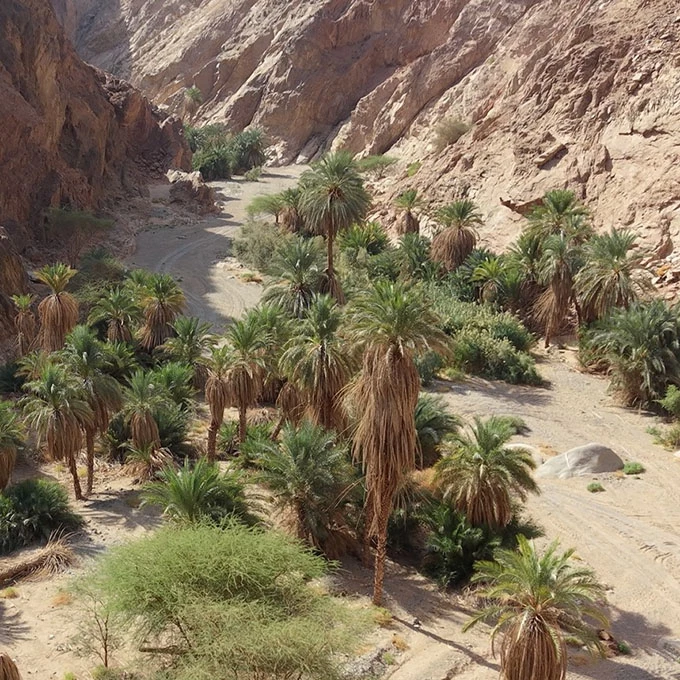
The spring re-emerges here after its absence through the Palm Grove, threading through reeds and a dense cluster of trees into a pocket of shade that feels genuinely enclosed. The temperature difference from the open Palm Grove behind you is immediate — several degrees cooler, with the sound of moving water replacing the dry rustle of the palms.
Fallen tree trunks provide natural seating along the spring edge. The pools and flowing channels attract wildlife at close range — move slowly and quietly here and the section returns more than it gives to those passing through.
The water continues downstream over a steep boulder slope — some stones over three metres across, smoothed by repeated flood events — forming small waterfalls that can be heard before they come into view. The scale of the boulders here gives some indication of the force the wadi carries in flood season.
The oasis concludes with a sharp right bend. It is one of the most sheltered points on the entire route, and the one most worth lingering in before the trail opens again into the Green Mile. The contrast between this pocket of shade and water and the exposure that follows is among the most abrupt transitions on the walk — sit here long enough to register it before you move on.
DIST320 m5 minElev. 120 m
Realm 5
Green Mile
Patterned granite walls, a spring-fed line of green, and acacia shade at the midpoint
A narrow rocky gate marks the entry. On the other side, the valley straightens into a three-hundred-metre corridor with rhythmic vertical granite walls on the left — the same Precambrian rock as throughout, but here arranged in near-regular columns that cast patterned shadows across the floor as the morning progresses.
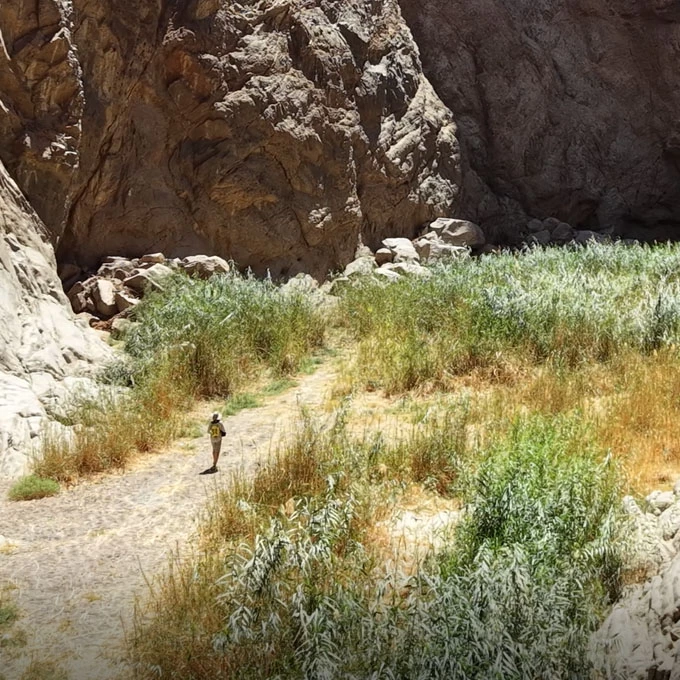
The spring runs through this section close to the surface, splitting and rejoining around low shrubs and ground cover that trace its path in a continuous line of green across the valley floor. The contrast is stark and immediate: grey rock, pale gravel, and then this persistent thread of living colour following the fault line beneath.
Midway, scattered boulders provide natural resting points in the partial shade of acacia trees. The birds that work this section — feeding along the spring edge and the shrub line — are worth watching from a seated position rather than passing through standing up.
The Green Mile connects the Oasis with the Gravel Plateau and functions as a decompression between them — from enclosure to exposure, from shade to open sky. The transition is gradual enough to notice if you are paying attention, and the rhythm of the granite columns on the left wall gives the section a sense of measured pace that the open sections either side of it do not have.
DIST280 m4 minElev. 110 m
Realm 6
Gravel Plateau
Six hundred metres of open valley floor — the most exposed section, and the most revealing
The wadi opens here into its broadest section — approximately six hundred metres of flat valley floor covered in fine gravel, the walls stepped back far enough that sky dominates rather than rock.
This is the most exposed section of the route. The gravel reflects heat, the walls offer no shade, and the straight sightlines mean there is nowhere to shelter mid-crossing. In summer, plateau surface temperatures can run significantly higher than ambient. Time this section for early morning or late afternoon; in the middle of the day, move through it quickly and with adequate water.
Toward the left-centre of the plateau, a cluster of date palms and a second doum palm form the route's only shade point — a genuine rest anchor, particularly useful on the return leg.
The Gravel Plateau's value is in what it does to your sense of the wadi: the openness makes the enclosure of the sections before and after it more vivid by contrast. It is the point from which the full width of the valley is briefly visible before the walls close in again — the canyon mouth behind you, the granite corridor ahead, the coastal threshold beyond. Take a moment here to look back at the canyon you have come through — the scale of it only becomes fully apparent from this open ground.
DIST620 m9 minElev. 90 m
Realm 7
Granite Passage
Narrow shaded corridor, six-metre boulders, and a fox den behind the largest stone
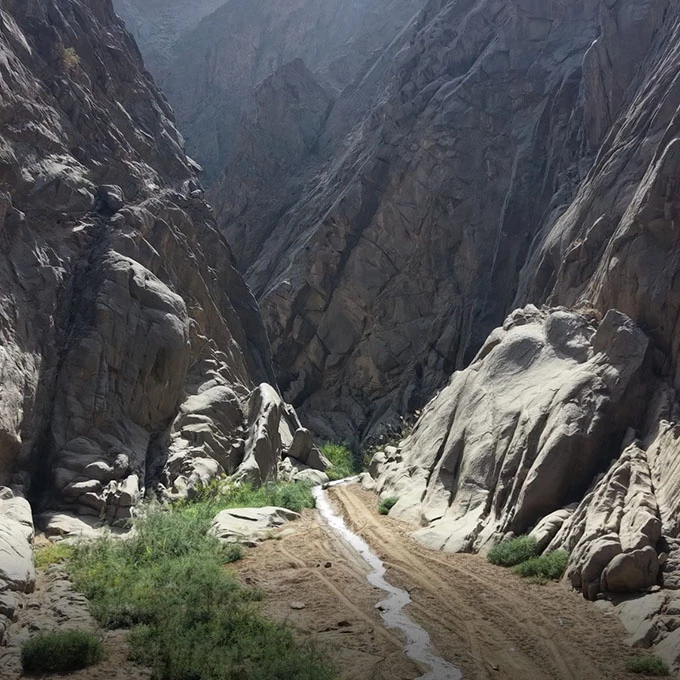
From the open plateau, the valley narrows sharply into a long granite corridor — walls only ten metres apart, rising high enough to keep the floor in shade through much of the day. The temperature drop entering this section is one of the most noticeable transitions on the route. After the exposed crossing of the Gravel Plateau, the Granite Passage functions as a natural recovery point.
The corridor widens as it progresses, the floor scattered with boulders up to six metres across — fallen from the walls above over geological time, smoothed and repositioned by successive floods. The scale of individual boulders here gives the section its character: they are not background rock, they are the room.
Behind one of the larger boulders, a sheltered den has been used regularly by Arabian Red Fox. Look for worn ground and scattered tracks rather than the animal itself, which will have heard you coming. High on the right-hand wall, a half-hemisphere cavity marks where exfoliation has removed a curved slab — an early stage of the process that eventually produces the loose boulders below.
The Granite Passage ends where the walls step apart and sunlight re-enters. The Reed Haven begins immediately, and the contrast — from dry enclosure to open green — is among the most abrupt transitions in the wadi.
DIST680 m10 minElev. 70 m
Realm 8
Reed Haven
Tall reeds, resurging spring, camels in the dense growth, bee-eaters above the palms
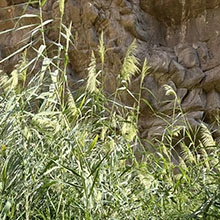
Sunlight returns as the Granite Passage opens, and the first thing it falls on is reeds — dense, tall stands that dominate the realm's full length and create a corridor of green within the wider granite corridor. The spring resurfaces here and runs close to the surface for the entire section, audible underfoot in places.
Two date palms rise above the reed line, visible from the passage exit and useful as navigation anchors. Agamas bask on the sunlit boulders between reed stands — conspicuous, unhurried, and easy to observe from close range without disturbing them. Frogs call near the water's edge. Bee-eaters work the air column above the palms in the migration seasons.
Camels graze regularly in this section, drawn by water and the shelter the tall reeds provide. They can be present and invisible until close range — the reeds are taller than an adult in the densest patches. If you encounter camels here, slow down, give them space, and let them move at their own pace. Females with young are protective; adult males can be unpredictable in close quarters.
The realm concludes in a particularly dense reed stand that marks the threshold before the next transition. The density and height of these reeds — far exceeding what the surrounding desert would suggest is possible — is one of the wadi's persistent surprises.
DIST720 m11 minElev. 50 m
Realm 9
Twin Pools
Miniature canyon, two rock pools fed by waterfalls, a shaded cave above the water
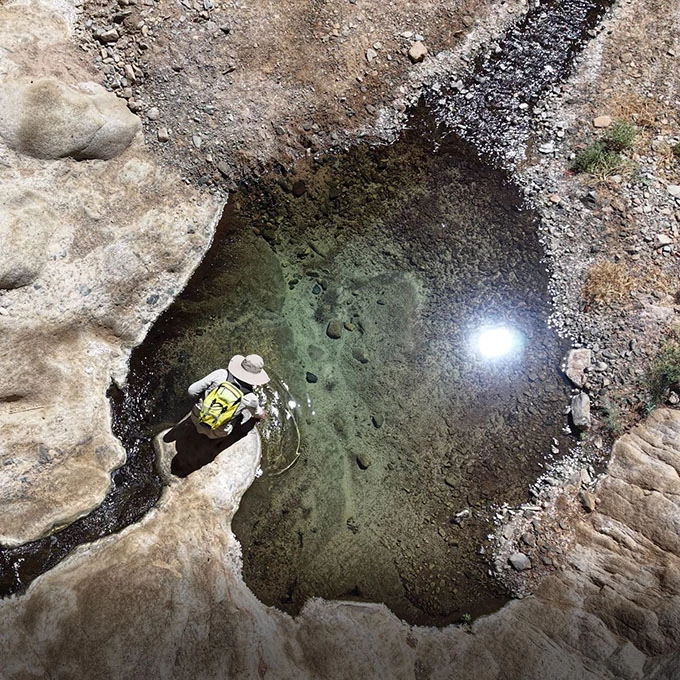
A sharp right turn from the Reed Haven brings the spring to a narrow granite mouth — the walls pressing close enough to funnel the water into a single channel before it widens again into a shallow, mirror-flat sheet reflecting the sunlit walls above. This is the most contained and most photographed section of the wadi, and the light here in mid-morning is worth timing for.
The water continues over a small waterfall into the first rock pool — approximately eighty centimetres deep in typical conditions, clear, fed continuously from above, and in the right season holding visible tadpoles in the shallows. A second waterfall leads to a second pool of similar character. The sequence is compact but complete: moving water, still water, rock, shade, wildlife.
An overhanging rock face creates a natural cave above the second pool — deep enough to sit in out of direct sun, with sightlines across both pools and the waterfall between them. Dragonflies work the water surface. This is the most ecologically concentrated point on the route and one of the most reliably rewarding for patient observation.
The Twin Pools are the single landmark most worth reaching if time or energy limits your distance. Everything that makes the wadi distinctive — water, geology, shade, wildlife — is present here in its most compact and accessible form.
DIST630 m9 minElev. 20 m
Realm 10
The Gulf
Desert gives way to sea — the Sinai mountains on the horizon, date palms at the shoreline
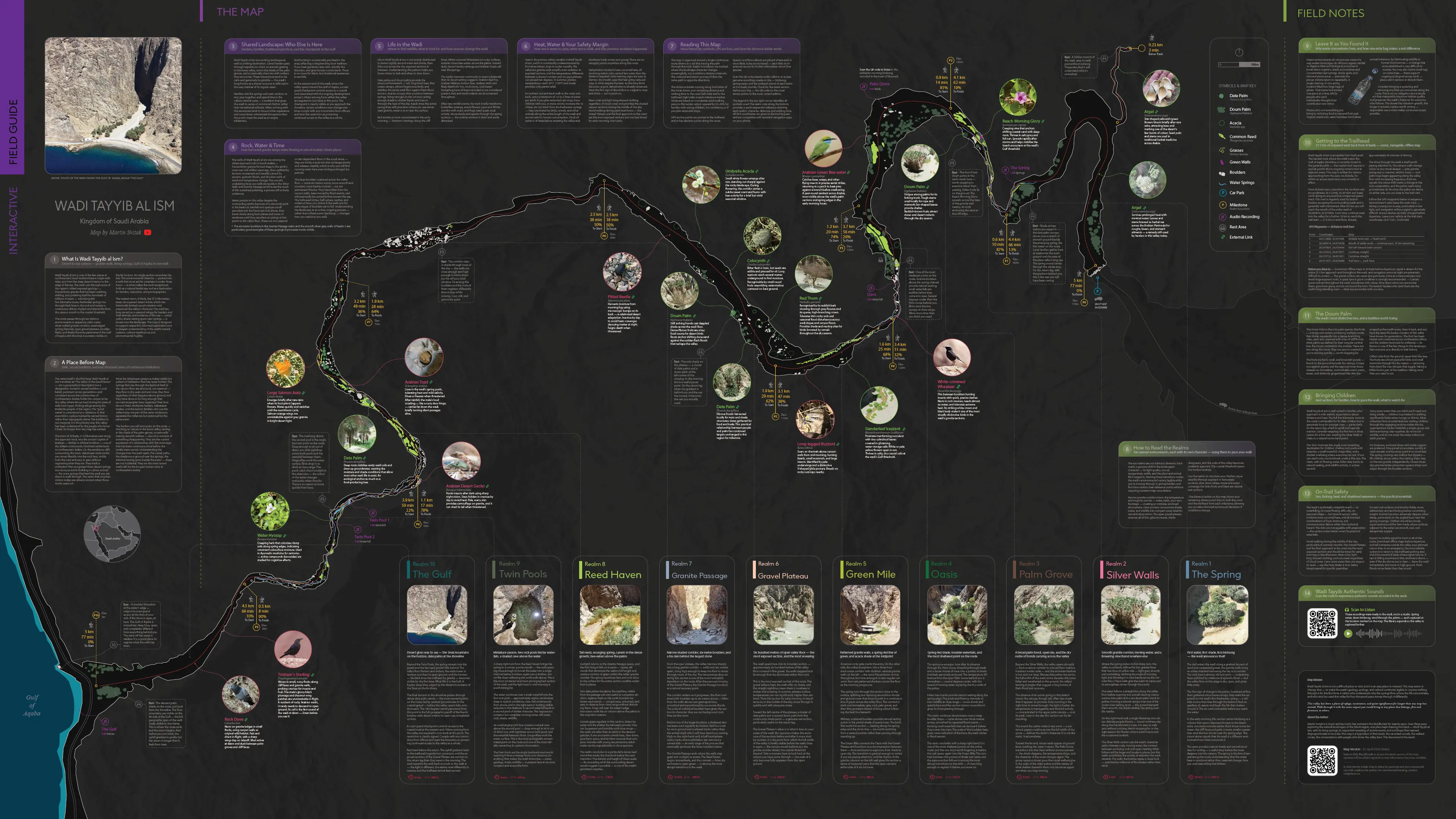
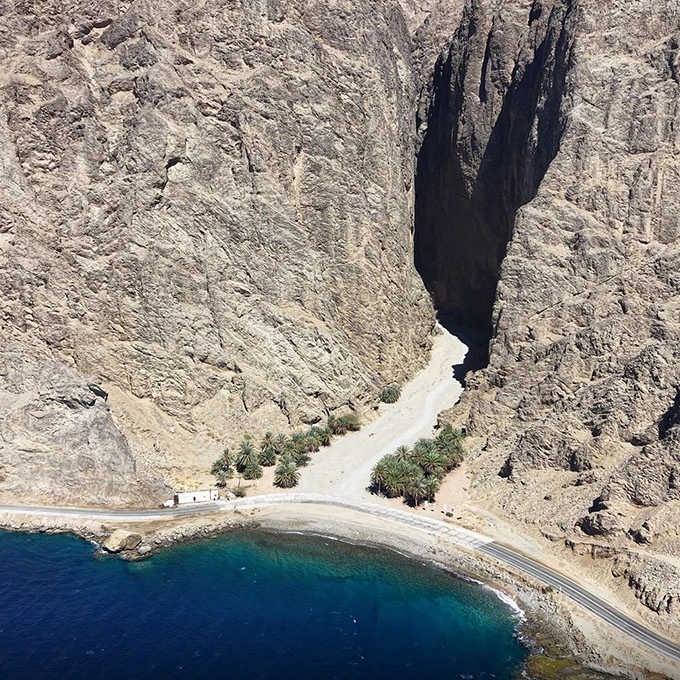
Beyond the Twin Pools, the spring retreats into the gravel and the last reed growth falls behind. The valley floor flattens and widens, the walls lower to terraces and then to open ground, and the horizon — blocked since the trailhead by granite — becomes visible for the first time. What fills it is the Gulf of Aqaba: deep blue, edged by the distant mountains of the Sinai on the far shore.
The final descent to the shoreline passes through dense date palm stands — the most seaward palms on the route, fed by residual groundwater in the coastal gravel — before the valley opens fully onto the beach. The 180-degree coastal panorama from this point is the full geographic payoff of the five-kilometre walk: desert interior to open sea, completed on foot.
A coast guard checkpoint controls access to the coastal road at the western end. Hikers arriving from the valley are required to turn back at this point. The restriction is clearly signed. Comply with any instructions from officers and treat the boundary as protecting continued access to the valley as a whole.
Rest here before the return. The uphill gradient back to the trailhead is gentle but consistent, and the exposed sections of the Gravel Plateau are warmer on the return leg than they were in the morning. The wadi rewards the walk back as much as the walk in — the light is different, the realms read differently in reverse, and the trailhead arrival feels earned.
The only palm that forks — multiple trunks branching from one root. Stiff arching fronds cast dappled shade; dense fibrous fruits are a key food source for desert birds.
Learn more
Date Palm
Phoenix dactylifera
Deep roots stabilise sandy wadi soils and draw up groundwater, creating moisture and shade conditions that allow most other wadi life to exist. An ecological anchor as much as a food-producing tree.
Learn more
Umbrella Acacia
Vachellia tortilis
Small white flowers emerge after rain, filling the corridor with a subtle sweet scent. During flowering the wadi hums briefly with bee activity.
Learn more
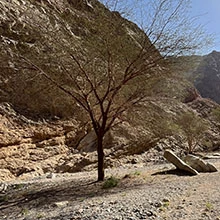
Red Thorn
Vachellia gerrardii
Recognised by its reddish bark showing through grey fissures. Tolerates thin rocky soils and flood disturbance. Provides shade and nesting sites for birds; browsed by camels through the dry season.
Learn more
Common Reed
Phragmites australis
Traces active spring lines with precision — where you see dense reed growth, water is at or near the surface. Reeds in the Reed Haven are taller than an adult.
Learn more
Argel
Solenostemma argel
Survives prolonged heat with minimal water. Leaves and stems brewed as herbal tea across the Arabian Peninsula for coughs, fevers, and stomach ailments — still used by herders in this valley today.
Learn more
Colocynth
Citrullus colocynthis
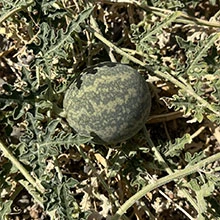
Bitter flesh is toxic but seeds are edible and pressed for oil. Long taproots reach several metres underground. Recognisable by small round fruits resembling watermelons scattered on bare ground.
Learn more
Water Hyssop
Bacopa monnieri
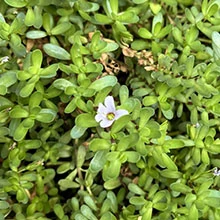
Creeping herb that colonises damp soils along spring edges, indicating consistent subsurface moisture. Active compounds studied for cognitive effects.
Learn more
Beach Morning Glory
Ipomoea pes-caprae
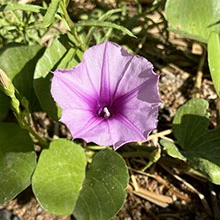
Creeping vine that anchors shifting coastal sand with deep roots. Thrives in salt spray and full sun. Spreads rapidly after storms and helps stabilise the beach ecosystem at the wadi's Gulf threshold.
Learn more
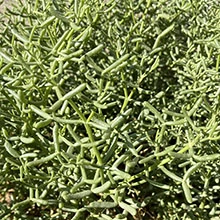
Slenderleaf Iceplant
Mesembryanthemum nodiflorum
Prostrate mat-forming succulent with tiny cylindrical leaves covered in glistening water-storage cells. Thrives in salty, dry coastal soils at the wadi's Gulf threshold.
Learn more
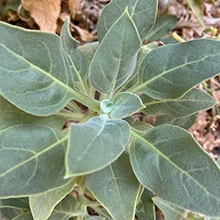
Ashwagandha (Winter Cherry)
Withania somnifera
Hardy medicinal shrub adapted to dry, rocky soils. Produces small red berries enclosed in papery husks; roots have been used for centuries in traditional medicine across Arabia and beyond. Recognised as an accepted species in major global taxonomic databases.
Learn more
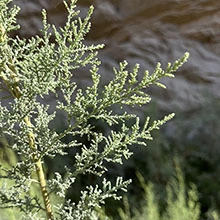
Tamarisk
Tamarix spp.
Salt-tolerant shrub or small tree common along watercourses and coastal margins. Fine, feathery foliage reduces water loss, while deep roots stabilise banks and access subsurface moisture — often forming the structural backbone of wadi vegetation near persistent water.
Learn more
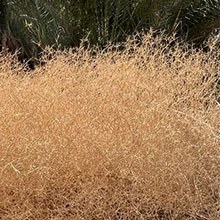
Spiny Sowthistle
Launaea spinosa
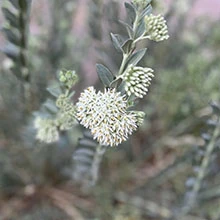
Drought-tolerant perennial with spiny branching form and small yellow flowers. Common in gravel plains and disturbed soils, often appearing as an associated species within mixed desert shrub communities.
Learn more
Faunaswipe →
Tristram's Starling
Onychognathus tristramii
Moves in small noisy flocks along cliff faces, probing crevices for insects and fruit. Its call is the first sound of the wadi at dawn — listen before you see it.
Learn more
Arabian Green Bee-eater
Merops cyanophrys
Catches bees and wasps in precise aerial strikes. A year-round resident, most visible above the wadi's palm sections and spring edges in the early morning hours.
Learn more
White-crowned Wheatear
Oenanthe leucopyga
Flits between boulders hunting insects. Nests in rock crevices, needs almost no water. Its striking white crown and black body make it one of the most visually distinctive birds in the granite sections.
Learn more
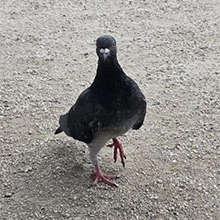
Rock Dove
Columba livia
Nests on granite ledges, using canyon walls as original wild habitat. Fast and direct in flight. Most active at dawn and dusk between palm groves and cliff faces.
Learn more
Long-legged Buzzard
Buteo rufinus
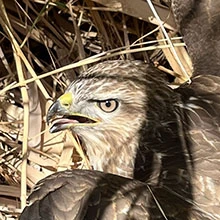
Soars on thermals above canyon walls from mid-morning, hunting lizards, small mammals, and large insects. Identified by pale underwings and a distinctive V-shaped glide posture.
Learn more
Arabian Toad
Sclerophrys arabica
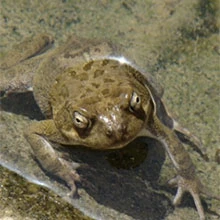
Lives in the wadi's spring pools, tolerating heat and mild salinity. After rainfall, the male's loud croaking — like a rusty door hinge — carries far down the wadi.
Learn more
Arabian Desert Gecko
Bunopus tuberculatus
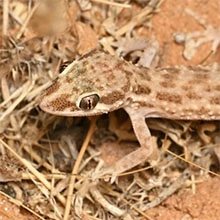
Hunts insects after dark using sharp night vision. Stays hidden in crevices by day. Pale warty skin provides camouflage on granite; can shed its tail when threatened.
Learn more
Pitted Beetle
Adesmia cancellata
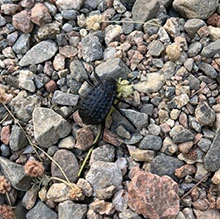
Harvests moisture from morning fog using microscopic bumps on its back — a celebrated desert adaptation. Inactive by day; scavenges decaying matter at night. Feigns death when threatened.
Learn more
Large Salmon Arab
Colotis fausta
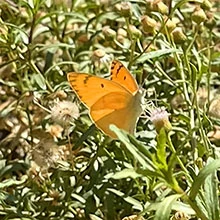
Emerges briefly after rare rains when its host plant Capparis flowers. Salmon-orange wings are unmistakable against grey granite in bright desert light.
Learn more
Red-rimmed Melania & Buccin Freshwater Snail
Melanoides tuberculata · Melanopsis buccinoidea
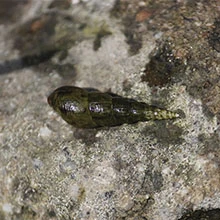
Two freshwater snails share the wadi's perennial spring channels and pools. The Red-rimmed Melania (Melanoides tuberculata) — visible here in dense clusters on wet rock — has a narrow, pointed turreted shell and grazes algae in large aggregations on submerged stone surfaces. The Buccin Freshwater Snail (Melanopsis buccinoidea), also present, is smoother and more teardrop-shaped, less conspicuous but equally widespread. Both species act as intermediate hosts for at least 12 species of parasitic flukes, some of which can penetrate human skin on contact with the water. Do not enter, wade in, or drink from the spring pools or stream channels. iNaturalist — Melanoides · iNaturalist — Melanopsis buccinoidea
Editorialswipe →
Map Mission
Wadi Tayyib al Ism is not a difficult place to visit, but it is an easy place to misread. This map exists to change that — to make the wadi's geology, ecology, and cultural continuity legible to anyone walking through it for the first time. A visitor who understands why the springs flow, where the life concentrates, and who else has used this valley for four thousand years moves through it differently.
This valley has been a place of refuge, sustenance, and quiet significance for longer than any map has existed. Walk through it with the same respect you would bring to any place that belongs, first and foremost, to others.
Martin Svitak
Martin Svitak is a Czech architect who has worked in the Middle East for twenty years. Over three years exploring the natural landscapes of the Tabuk region, one place kept drawing him back — Wadi Tayyib al Ism, with its living springs, its sequential revealing of environments, and a richness that seemed disproportionate to its scale.
This map is a byproduct of that study: the recorded sounds, the walked routes, the conversations with people who know the valley best. This document is the result.
Legal Disclaimer & Terms of Use
1. Nature of the Project waditayyib.com is a private, non-commercial, and non-profit educational initiative created and maintained by Martin Svitak. This website serves as a digital field guide documenting the natural systems, cultural history, and practical trail information of Wadi Tayyib al Ism, Saudi Arabia. This project is entirely independent and is not affiliated with, endorsed by, or an official representation of the Ministry of Tourism, the Ministry of Culture, the National Center for Wildlife, or any other governmental entity of the Kingdom of Saudi Arabia.
2. Intellectual Property & Media All photographic imagery, cartography, and drone cinematography featured on this website are the original intellectual property of Martin Svitak, unless otherwise explicitly credited. These materials are provided for educational and informational purposes only. Unauthorized reproduction, distribution, or commercial use of this content without express written permission is strictly prohibited.
3. Drone Operations & Regulatory Compliance All aerial cinematography and drone-based data collection presented on this site have been conducted in strict accordance with the regulations set forth by the General Authority of Civil Aviation (GACA) of Saudi Arabia. The operator holds all necessary permits for flight within the designated zones.
4. Accuracy & Versioning While every effort is made to ensure the content is accurate at the time of publishing, trail conditions and access regulations may change without notice due to weather events, construction activity, or administrative updates. Always verify current conditions locally before departure and carry offline navigation as a backup. This is a living document. Species data, trail information, and access conditions are updated as the wadi is explored further. The version date is displayed on the map — always check for the latest edition before your visit.
5. Safety & Personal Responsibility Wadi Tayyib al Ism is a remote and rugged natural environment. This site provides information to support safe and responsible visits. Visitors assume full responsibility for their own safety and must comply with all local access regulations, environmental laws, and cultural expectations. waditayyib.com and its creator shall not be held liable for any injury, loss, or legal issues encountered by individuals visiting the locations described. All visitors are urged to follow Leave No Trace principles.